A parody of an argument: Defending a UOC bishop in response to a Phanar archon
In September 2026, Metropolitan Theodosiy of Cherkasy and Kaniv gave an extensive interview to the Greek news agency Romfea. To Greek readers, much of what he said must have sounded unusually blunt. The hierarch spoke about criminal cases against UOC bishops, the seizure of the cathedral in Cherkasy, the mobilization of clergy to the front, and the procedure aimed at stripping the Kyiv Metropolia of its legal status.
Among other things, he recalled that even before he was driven out of his cathedral, he had appealed directly to Patriarch Bartholomew from the altar of the besieged church. He asked the Patriarch to restrain those whom Constantinople had recognized as the canonical Church. It was OCU representatives who were behind the seizure of the Cherkasy cathedral, and it was ultimately handed over to them.
No answer ever came from Patriarch Bartholomew.
But an answer did come from elsewhere.
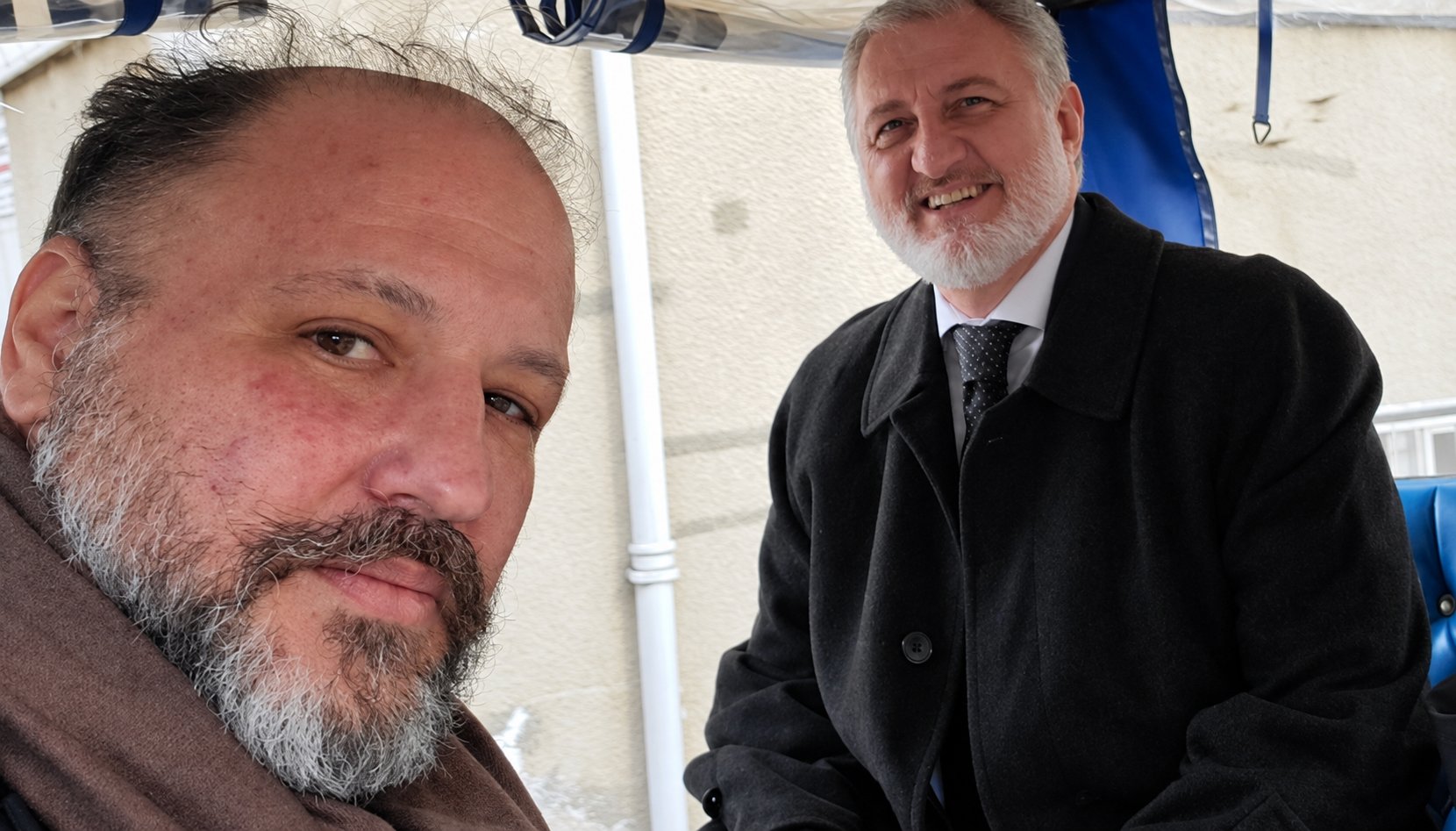
An article by Ecumenical Patriarchate Archon Elias Damianakis titled “A Parody of Canonical Order” appeared on Substack. It was subsequently republished by various outlets, including in Ukrainian translation.
The author is well known in Greek-American circles. He is a Florida-based iconographer, founder of the parish of Saints Raphael, Nicholas and Irene in Palm Harbor, and a longtime public defender of the Ecumenical Patriarchate. His website explicitly states that it is dedicated to “defending religious freedom” and supporting the Church of Constantinople.
That is worth remembering. We will return to it.
The archon’s article might have been ignored, as so much written in the heat of ecclesiastical polemics is ignored. But it was widely circulated by the media. More importantly, it advances two arguments that, for all their superficial logic, carry dangerous implications.
The first is this: if the UOC asks Patriarch Bartholomew to intervene and stop the seizures of its churches, then it thereby recognizes his jurisdiction over Ukraine.
The second: restrictions on religious freedom are permissible when justified by considerations of national security.
Both claims deserve closer examination. Because if accepted without qualification, they will ultimately strike first and foremost at the Church of Constantinople itself.
Thesis one: Requesting help means recognizing jurisdiction
At first glance, the archon’s reasoning seems logical: whoever asks someone for protection thereby recognizes the authority of the person being asked. Metropolitan Theodosiy asked Patriarch Bartholomew to intervene – therefore, he recognized the Patriarch’s canonical authority over himself and his flock.
But this conflates two entirely different things.
It is one thing to ask someone to exercise authority over you. It is quite another to ask him to restore order among his own subordinates.
Metropolitan Theodosiy did not ask the Patriarch to judge him. He did not appeal his case to a Phanar tribunal. He did not ask the Patriarch to consecrate his auxiliary bishops or approve the statutes of the Cherkasy Eparchy.
No.
Metropolitan Theodosiy asked the Patriarch to influence those whom the Patriarch himself had recognized as the canonical Church. These are the very people to whom he granted the Tomos and whom that Tomos calls “our spiritual daughter” (Patriarchal and Synodal Tomos of January 6, 2019: “We recognize and proclaim the Autocephalous Church established within the territory of Ukraine as our spiritual daughter”).
One need only read the Tomos to the end.
It preserves for all OCU hierarchs and clergy “the right of appeal to the Ecumenical Patriarch, who bears the canonical responsibility for issuing irrevocable judicial decisions in matters involving bishops and other clergy of the local Churches.” On all major ecclesiastical, dogmatic, and canonical matters, it requires the Metropolitan of Kyiv to appeal to “our Most Holy Patriarchal and Ecumenical Throne.” The Throne’s rights to an Exarchate in Ukraine and to stavropegia are likewise preserved “undiminished.”
In other words, Patriarch Bartholomew possesses very real levers of authority over the OCU, and they are explicitly written into the Tomos: judicial authority over its clergy, mandatory recourse to Constantinople on major issues, an Exarchate of his own, and stavropegia on Ukrainian territory.
Suppose an OCU cleric leads a crowd in the seizure of a church, as happened in Cherkasy – and not only there. Without exceeding the authority claimed in his own Tomos, the Patriarch could demand that the cleric stop the lawlessness and, if he refused, impose canonical sanctions.
By asking the Patriarch to restrain his own clergy, Metropolitan Theodosiy acknowledges his authority over the OCU – which is obvious anyway – not over the UOC.
Church history offers many examples of similar appeals, and no one has ever concluded from them that the petitioner thereby recognized another bishop’s jurisdiction.
In the 370s, St. Basil the Great repeatedly wrote to the West – to Pope Damasus of Rome and to the bishops of Italy and Gaul. He implored them to intervene in the affairs of an East torn apart by Arian violence. Letters 70, 90, 92, and 243 in the collection of his correspondence are filled with pleas for assistance.
Yet no Orthodox canonist, including canonists of the Constantinopolitan school, has ever argued that by writing those letters Basil recognized Roman jurisdiction over Cappadocia. On the contrary, the letters are cited as evidence that the East could seek help from the West while remaining independent of it.
The example of St. John Chrysostom, Archbishop of Constantinople, is even more telling. Deposed in 404 with the direct involvement of imperial authority, he addressed a letter to Pope Innocent I of Rome. The text is preserved in Palladius's "Dialogue on the Life of Chrysostom" and in the Patrologia of Migne (PG 52, col. 529–536). Chrysostom asked Rome to condemn what had occurred and to refuse recognition of his successor.
And here is the crucial point: Orthodox polemicists, including those of Constantinople, have always insisted that Chrysostom’s appeal to Rome did not constitute recognition of papal jurisdiction over Constantinople.
It was an appeal to a brother, not to a master.
On what grounds, then, should Metropolitan Theodosiy’s appeal to Patriarch Bartholomew be interpreted differently?
Either both appeals constitute recognition of jurisdiction – in which case Constantinople will have to acknowledge Roman authority over itself – or neither does.
There is no third option.
There is also a much simpler analogy that requires no expertise in canon law.
An ambassador may lodge a protest with another country’s government over the actions of that country’s citizens. No one imagines that by doing so he has recognized that foreign government’s jurisdiction over his own country. He merely recognizes that those citizens answer to their own government.
Put simply, Metropolitan Theodosiy asked the Patriarch to restrain those whom the Patriarch himself calls his spiritual daughter. If you created the structure, you bear responsibility for it. That is not recognition of authority over the UOC. It is a perfectly logical reminder of responsibility.
Thesis two: National security as justification for persecution
The archon’s second argument is even more dangerous – not merely for the UOC, but for every Local Church.
Damianakis’ article suggests that restrictions imposed on a Church may be acceptable when justified on national security grounds. The author apparently failed to notice where that principle leads when followed to its logical conclusion.
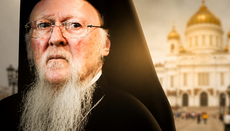
Let us begin with the law, since the archon lives in a country where law is taken seriously.
Ukraine has been a party to the European Convention on Human Rights since 1997. Article 9 guarantees freedom of thought, conscience, and religion. Its second paragraph lists the grounds on which the manifestation of religion may be restricted: public safety, protection of public order, health or morals, and protection of the rights and freedoms of others.
National security is not on that list.
That is neither an accident nor an omission. Articles 8, 10, and 11 of the Convention expressly mention national security as a permissible ground for restrictions. Article 9 does not.
In the case of Nolan and K. v. Russia (Application No. 2512/04, judgment of 12 February 2009), the European Court of Human Rights expressly noted that the Convention’s drafters deliberately omitted national security from the grounds permitting interference with religious freedom.
A state may restrict the activities of particular individuals in response to particular offenses. But it cannot restrict religious freedom itself simply by invoking national security.
That is precisely the principle the archon’s argument would overturn.
Now let us turn to history – something the archon himself is particularly fond of invoking.
On April 10, 1821, Easter Sunday, Patriarch Gregory V of Constantinople was hanged at the gate of the Patriarchate. The Ottoman authorities accused him of failing to keep his Orthodox flock obedient after the uprising in the Morea and held him, as ethnarch, responsible for the rebellion.
From the Ottoman state’s perspective, this was a national security matter in its purest form. A war was underway, and the leader of the community from which the rebels had emerged was regarded as a threat.
If the archon’s logic is accepted, Sultan Mahmud II acted legitimately.
The Church, needless to say, thinks otherwise.
It glorified Gregory V as a hieromartyr, and his relics now rest in the Metropolitan Cathedral of Athens. No Orthodox Christian believes that invoking “national security” could ever justify that gallows.
Let us go further.
In 1971, the Turkish state closed the Theological School of Halki. Following a Constitutional Court ruling prohibiting private institutions of higher education, the school, which had trained clergy for the Patriarchate since 1844, was deemed incompatible with the state educational system.
Ever since, Ankara has agreed to reopen it only under the auspices of a state university. As the Turkish delegation stated at the OSCE, "Turkish law requires that religious education take place under state supervision."
On 26 June 2007, the Turkish Court of Cassation ruled that the Patriarchate has no right to the title "Ecumenical" and possesses no legal personality. The court described it merely as a religious body of the Greek minority, fully subject to Turkish law. The ruling was grounded in the Treaty of Lausanne of 1923.
That same year, the Patriarch faced prosecution under Article 219 of the Criminal Code for the mere use of the word "Ecumenical."
In July 2025, Turkish Foreign Minister Hakan Fidan stated in a letter to parliament that the title "Ecumenical" carries no legal weight either in Turkey or in international law. According to him, the Patriarchate's role is confined to serving the religious needs of the Greek minority.
The Turkish side has consistently justified all of this by invoking the Treaty of Lausanne, state sovereignty, and Turkish law. In nationalist rhetoric, the Patriarchate’s very activity has repeatedly been portrayed as a threat to the foundations of the Republic.
And yet the Order of Archons – to which the author of the article belongs – has spent year after year campaigning against these restrictions and describing them as violations of religious freedom.
The Venice Commission of the Council of Europe, in Opinion CDL-AD(2010)005 of 12–13 March 2010, stated explicitly: any interference with the Patriarchate's right to its historical title would constitute a violation of the Church's autonomy under Article 9 of the European Convention.
The Patriarchate itself has gone to the Strasbourg Court.
In the case of Fener Rum Patrikliği (Ecumenical Patriarchy) v. Turkey (Application No. 14340/05, judgment of 8 July 2008), it secured a ruling that Turkey had violated its rights by confiscating the orphanage on Prinkipo.
So in practice, the Ecumenical Patriarchate itself proceeds from the principle that a state cannot hide behind its laws and interests while trampling on the rights of the Church.
It would be strange indeed if one of its archons were now arguing the opposite.
And that raises an uncomfortable question. If restrictions on religious freedom are acceptable in Kyiv in the name of national security, why are they unacceptable in Istanbul?
If Ukraine may strip the UOC’s Kyiv Metropolia of legal status because it considers it connected to a hostile state, why may Turkey not do the same to the Patriarchate?
Ankara has regarded Greece as a geopolitical rival for decades and could just as easily claim that the Patriarchate is connected to it.
Without intending to, the archon has handed Ankara a ready-made argument against the Ecumenical Patriarchate itself.
What the Fathers say
The Church answered this question long before the European Convention existed – and its answer was unequivocal.
The early Christian writer Tertullian, in his letter to the proconsul of Africa Scapula, wrote: "It is a fundamental human right, a privilege of nature, that every man should worship according to his own convictions: one man's religion neither harms nor helps another man. It is assuredly no part of religion to compel religion – to which free-will and not force should lead us."
Lactantius, tutor to Crispus, son of Emperor Constantine, wrote in the "Divine Institutes": "Nothing is so much a matter of free will as religion; in which, if the mind of the worshipper is disinclined to it, religion is at once taken away, and ceases to exist."
But perhaps the most important testimony comes from St. Athanasius the Great, who knew better than most what persecution carried out in the name of state interests looked like.
In the "History of the Arians," he records the letter of Saint Hosius of Cordoba to Emperor Constantius, who demanded that bishops sign the condemnation of Athanasius for the sake of "peace in the empire": "Intrude not yourself into ecclesiastical matters, neither give commands unto us concerning them; but learn them from us. God has put into your hands the kingdom; to us He has entrusted the affairs of His Church."
In the same work, Athanasius himself states the principle that everyone who speaks so casually of “security justifications” ought to learn by heart: “Truth is proclaimed not by swords, nor by arrows, nor through soldiers, but by persuasion and counsel.”
Constantius, too, believed he was acting in the interests of the state. The Arians, too, insisted that the Orthodox were sowing disorder. But it was not Constantius whom the Church glorified.
Canons on the boundaries that must not be crossed
The archon titled his article “A Parody of Canonical Order.” It is therefore worth recalling what canonical order actually says about one of the most fundamental questions of all: the boundaries of Churches.
Apostolic Canon 34 establishes that the bishops of every nation must recognize the first among them and do nothing of consequence without his judgment. But neither may the first do anything without the judgment of all.
Canon 2 of the Second Ecumenical Council forbids bishops from extending their authority over Churches beyond their own territory. It prescribes that “the Churches of God among barbarian nations” be governed “according to the custom of the Fathers which has prevailed.”
Canon 8 of the Third Ecumenical Council arose from the dispute over the Church of Cyprus. Antioch attempted to subordinate Cyprus on the grounds that the island belonged administratively to the Antiochian civil diocese. The Council sided with Cyprus and forbade any bishop from seizing “another province which has not from the beginning been under his hand or that of his predecessors.”
The purpose of the prohibition is stated explicitly in the canon: lest “the arrogance of secular power” creep in “under the pretext of sacred ministry” – ἐξουσίας τῦφος κοσμικῆς. That formula was born out of the dispute over Cyprus. In Nicosia, it has not been forgotten.
Canon 22 of the Council of Antioch expresses the same principle: a bishop must not enter another bishop’s city and exercise ecclesiastical authority there without the local bishop’s consent.
There are also canons dealing directly with state interference in Church affairs.
Apostolic Canon 30 declares that if a bishop uses secular rulers to obtain a church through their power, he is to be deposed and excommunicated.
Canon 3 of the Seventh Ecumenical Council declares invalid any election of a bishop, priest, or deacon carried out by secular rulers: Πᾶσαν ψῆφον γινομένην παρὰ ἀρχόντων… ἄκυρον μένειν.
Canon 12 of the Fourth Ecumenical Council forbids dividing one ecclesiastical province into two by appealing to the civil authorities.
In Ukraine today, churches are transferred from one jurisdiction to another by decisions of local councils. Meanwhile, a procedure to strip the UOC’s Kyiv Metropolia of its status has been launched under Law No. 3894-IX, which entered into force on September 23, 2024.
Against that background, these ancient canons sound as though they were written not fifteen centuries ago, but yesterday.
A matter of tone – and details
Anyone who opens the archon’s article will notice one curious detail: Metropolitan Theodosiy is identified there as the Metropolitan of Kherson.
A small mistake, perhaps.
But a revealing one.
Cherkasy and Kherson lie in different regions of Ukraine. They are different eparchies with very different circumstances. The Kherson Eparchy today finds itself divided by the front line. The Cherkasy Eparchy has endured the seizure of its cathedral, while its ruling hierarch has been standing trial for years.
The author undertakes to pronounce judgment on Ukraine’s canonical situation while confusing the very see of the bishop he is writing about.
That is more than a typo. It suggests that the subject of his polemic is known to him largely through other people’s retellings. From Florida, apparently, Cherkasy and Kherson can begin to look much the same.
The condescending tone of the article deserves separate mention. We note this not because we wish to answer in kind. But there is something instinctively repellent about speaking with smug condescension about Christians who are under pressure from the state.
Metropolitan Theodosiy spent months under house arrest. He is standing trial. During the seizure of his cathedral, he suffered a concussion after being struck with a stick by an OCU “believer.”
One may disagree with his ecclesiology. One may challenge his interpretation of particular decisions. But a man writing from comfort about a bishop standing trial in a country at war might at least observe a minimum measure of respect.
The Church has always shown such respect to those who suffer and has treated suffering with reverence regardless of who ultimately proves correct in a dispute.
It would seem the archon has read rather fewer of the Fathers than he has Ukrainian media reports.
What the Greeks stand to lose
Something uncomfortable must now be said to the Greek reader.
Anyone who cares about Church affairs deserves to hear it.
Many people in Greece and Cyprus sincerely sympathize with the UOC over what it has endured in recent years. Yet day after day, the same message is being poured into the Greek information space: that the UOC is somehow not a “real” Church, that a different standard may therefore be applied to it, and that what is happening to it is not persecution but the restoration of order.
The archon’s article is merely one example of that stream.
Gradually, people grow accustomed to the idea. Their understanding of what is actually happening erodes. What yesterday would have provoked outrage today produces little more than a shrug.
But what is being lost is not merely sympathy for the UOC.
Something far more important is being lost: the ability to recognize persecution as persecution, regardless of who is being persecuted.
The Greek people knew how to make that distinction for centuries.
They knew it in 1821.
They knew it in Asia Minor in 1922.
They knew it during the Constantinople pogrom of 1955.
They knew it in Cyprus in 1974.
A people who know from their own history what it means to suffer for their faith and for the name “Christian” should not allow themselves to be persuaded that persecution becomes legitimate merely because someone has stamped the words “national security” on it.
The Estonian precedent
There is another precedent worth recalling – one the Phanar does not particularly like to remember.
In 1996, the dispute over Estonia led Moscow to break Eucharistic communion with Constantinople. The rupture lasted three months. Then, in Zurich, the two sides reached an arrangement under which two jurisdictions would coexist on the same territory, and communion was restored.
No one emerged from that agreement as a triumphant victor.
But the peace of the Church was preserved.
The precedent shows that Patriarch Bartholomew is capable of seeking compromise when he chooses to do so.
He has every opportunity to do what Metropolitan Theodosiy asked of him.
He can publicly call for an end to church seizures. He can demand that OCU clergy refrain from violence. He can impose canonical measures on the most aggressive offenders.
Canonically, this would cost him nothing. The OCU is already bound to Constantinople by the terms of its own Tomos.
But reputationally, it would cost him a great deal.
It would mean acknowledging that the structure created in 2018 has slipped beyond his control.
Instead of a conclusion
Archon Elias Damianakis titled his article “A Parody of Canonical Order.”
There is indeed a parody here.
But it is not a parody of canonical order.
It is a parody of an argument.
A plea for help is transformed into submission.
Political expediency is transformed into a right to persecute.
Respect for the Patriarch is transformed into an obligation to justify everything done under his omophorion.
Canonical order recognizes none of this.
It knows Canon 8 of the Council of Ephesus and its warning against the arrogance of secular power.
It knows Apostolic Canon 30 and what it says about bishops who obtain churches through the power of civil authorities.
It knows the words of Hosius of Cordoba: the kingdom has been entrusted to one, the Church to another.
Those who defend the Great Church would do well to remember these things at least as faithfully as they remember the School of Halki.