UOC left out again as DESS updates list of groups eligible for exemptions
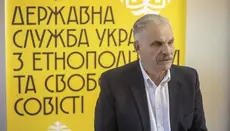
The State Service of Ukraine for Ethnopolitics and Freedom of Conscience (DESS) has updated its list of religious organizations classified as critically important. The document was published on the agency’s website on September 8 and approved by DESS Order No. H-145/11, which issued a revised version of the June 6, 2025 Order No. H-82/11.
Inclusion on the list allows a religious organization to exempt its employees, including clergy, from mobilization.
The updated list runs 856 pages and includes 11,220 organizations from 23 regions and Kyiv. Compared with the first version published in June 2025, it has grown by nearly 3,500 entries.
Not a single community of the Ukrainian Orthodox Church appears on the list.
OCU structures make up the largest group, with more than 3,500 organizations. The UGCC is represented by about 2,300 organizations, while the Roman Catholic Church has 648.
A separate category consists of religious organizations that still exist legally but in practice ceased operating long ago. The list includes 61 organizations of the UAOC – a jurisdiction that dissolved itself in December 2018 after announcing that it was joining the OCU. The largest number of such communities – 36 – are in the Ivano-Frankivsk region.
In addition to parishes, mobilization exemptions were granted to the St. Michael Men’s Monastery of the UAOC’s Ivano-Frankivsk Eparchy (entry 08-0834) and the consistory of the UAOC’s Cherkasy and Kirovohrad Eparchy (21-0051). Another 184 organizations are listed as structures of the UOC-KP.
The state also considers pagan communities critically important to Ukraine’s economy – 19 of them are included on the list.
Six belong to RUNVira: “Light of Dazhboh” in the Vinnytsia region, “Oriiany” in Zhytomyr, the “Berehynia-1” chapter in Lviv, “Blahodiina” in Starokostiantyniv, a community in Kyiv, and the “Spiritual Center of the Association of the Sons and Daughters of Ukraine of RUNVira” in the Khmelnytskyi region.
Another six represent the “Ancestral Hearth of the Native Orthodox Faith”: “Circle of Veles” in the Dnipropetrovsk region, “Svitovyd’s Truth” in Lviv, “Light of the Kin” and “Power of the Kin” in Kharkiv, a spiritual center in the Khmelnytskyi region, and the higher theological educational institution “Orthodox Native Faith Academy of Religious Studies.”
The remaining seven are the Ukrainian Native Faith communities “Poliany” and “Age of Aquarius” in the Kyiv region, as well as the Kyiv-based groups “Orthodoxy” founded by writer Halyna Lozko, “Fern Flower,” “Religion of Nature,” “Pocon of the Kin,” and “Tree of the Kin.”
The list also includes organizations directly linked to Russian church centers: ten organizations of the Russian Orthodox Church Outside of Russia – including the diocesan administration of the ROCOR Odesa Eparchy, a theological seminary and two monasteries – as well as seven Old Believer communities, some of which belong to the Russian Orthodox Old-Rite Church headquartered in Moscow.
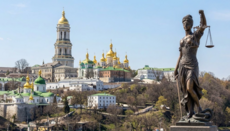
The Kyiv-Pechersk Lavra is listed as the “men’s monastery of the Ukrainian Orthodox Church (Orthodox Church of Ukraine).”
Thus, the state has granted the right to exempt clergy from mobilization both to a structure that has not existed for nearly eight years – the UAOC – and to communities that worship Dazhboh. The only confession left off the list is the country’s largest, the Ukrainian Orthodox Church, whose priests continue to be taken to the front by military enlistment officers.
As previously reported by the UOJ, DESS head Viktor Yelensky, when asked about exemptions for UOC bishops, said: “We don’t exempt people like that.” He acknowledged that a clergyman who is sent to the front loses his clerical status, but stressed that appeals from foreign religious centers do not affect the Ukrainian authorities’ position.