How does the Orthodox Church view second marriages?
The Church does not encourage second marriages and does not regard them as the norm. This is natural, for the Christian ideal of family life has always been a single, indissoluble union – a bond founded on lifelong fidelity and love. “What therefore God has joined together, let not man put asunder” (Matthew 19:6).
For this reason, Church canons prohibit ordaining those who are in a second marriage or married to a divorced woman, and they forbid entering into another marriage after receiving holy orders.
Nevertheless, in its pastoral mercy, the Church allows laypeople to enter a second marriage under certain circumstances – for example, in cases of adultery, death of a spouse, or other serious reasons. Such a marriage is not viewed as a norm but as oikonomia – a compassionate concession to human weakness, born of love and pity for someone whose first union has broken down. The very fact that the Church permits such a marriage bears witness to her maternal care: she does not reject but receives, blesses, and gives the opportunity to build a new family in Christ.
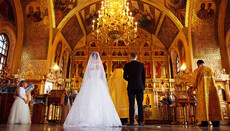
The rite of marriage for those marrying a second time is similar to the usual one, but it omits some festive elements (for instance, the crowns are not placed upon the couple) and contains special prayers of repentance. This is natural, since the person has not preserved the grace of the first marriage; now the Church reminds them of the seriousness of their responsibility – so as not to repeat past mistakes and to accept this new gift with gratitude.
At the same time, one should not feel diminished by this. It would be as unreasonable as considering confession humiliating merely because it involves acknowledging one’s sins. On the contrary, the purpose of this special rite is not punishment but instruction, purification, and sanctification of a new marital life. The Church, like a loving Mother, grants a second chance, calling to greater wisdom, patience, and responsibility – so that the new union may be strong and blessed.