Lies, scandals and division: Anniversary of OCU ‘Unification Council’
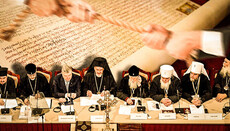
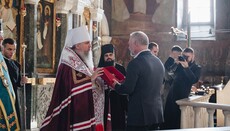
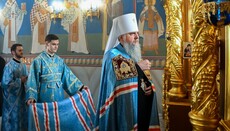
On December 15, 2021, Dumenko and his associates are pompously celebrating the third anniversary of the so-called “Unification Council” at which the OCU was created.
The council only avoided collapse thanks to Poroshenko’s efforts, including, according to Klyment Kushch, an order to close airports and prevent the Phanar delegation from leaving the country.
Kliment Kushch: “The entire process of creating a united Orthodox Church in Ukraine was on the verge of collapse because the Greek delegation wanted to leave Ukraine. And, as the president [Poroshenko – Ed.] said, he ordered the airport closed and instructed that no aircraft be allowed to depart.”
Epifaniy is now writing on Facebook that the council “brought together three streams of once-divided Ukrainian Orthodoxy into one powerful and unstoppable current.” In other words, Dumenko claims that three structures were united in the OCU: the Kyiv Patriarchate, the Autocephalous Church and the canonical Ukrainian Orthodox Church.
Is that true? Of course not. It is an ordinary lie that is plain for everyone to see.
When three organizations unite into one, that means the original organizations cease to exist. Yet Ukraine had three confessions before the 2018 pseudo-council and still had three afterward. Before, there were the UOC, UOC-KP and UAOC; afterward, there were the UOC, UOC-KP and OCU.
The canonical Church has remained virtually unchanged since then. Despite enormous pressure, Dumenko’s supporters have managed to transfer fewer than one percent of all parishes.
Moreover, the schismatics themselves split internally. Six months after the OCU was established, Filaret left it and restored his Kyiv Patriarchate. He said Dumenko and Poroshenko had deceived him at the “council,” having promised that he would effectively lead the OCU. Filaret publicly maintained that an agreement had existed under which Epifaniy would represent the OCU externally while Filaret retained control over internal church affairs.
Alexander Drabinko: “He [Filaret – Ed.] was promised that he would effectively lead the Church, while Metropolitan Epifaniy would be the ‘Queen of England,’ if you’ll pardon the expression.”
Filaret’s Kyiv Patriarchate now has 14 so-called “bishops,” including two Greek Old Calendarist schismatics. Filaret appointed another one for the diaspora in the United States. And just days before the anniversary, OCU spokesman Yevstratiy Zoria publicly called him a “scoundrel.”
Dumenko’s supporters are fighting with Filaret’s followers in attempts to take churches from them. Scandals and infighting are also a constant feature within the OCU itself. In the Kharkiv region, one “hierarch” is taking parishes from another.
Mykhailo Zinkevych, Dumenko’s main rival for the primacy at the “council,” has repeatedly said that he has not abandoned his aspirations to lead the Church and continues to serve wearing a patriarchal mantle.
TSN: “He withdrew his candidacy under pressure but has not abandoned his ambition to lead the Church. Mykhailo recognizes Metropolitan Epifaniy but has not given up hope of one day heading the Church.”
And, of course, attempts to seize churches from the Ukrainian Orthodox Church continue. Such attempts have been particularly active in the Vinnytsia region.
Archpriest Vasyl Balan: “They call it a unification council, and today is its anniversary. But it was not a unification council – it was a council of division, because they did not unite. Our [Mohyliv-Podilskyi – Ed.] district is a perfect example. They have two representatives of the so-called OCU clergy: one under ‘Archbishop’ Mykhailo and the other under the so-called Metropolitan Simeon. And each has his own ‘dean.’ So what kind of unification council was it? Yours was a council of division. We unite the nation, our Church unites the nation, and God unites the Church.”
And Father Vasyl put it very precisely: the OCU council was not a council of unification but a council of division.
Its legacy is lies, scandals, hatred and new divisions.
Can such an event be considered something positive for Ukrainians?
Everyone can answer that question for themselves.