Stories of the Ancient Church. Level of Governance: Patriarch
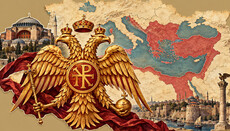
How did several episcopal sees rise above the rest, why did the church map begin to repeat the map of the empire, and is the patriarchate a sacred form of Church organization?
In previous publications, we examined how the structure of church governance developed and became more complex. We saw how a single Christian community headed by a bishop gradually grew into a diocese, and how several dioceses then gave rise to a metropolis.
But the Church continued to grow and develop. Over time, questions began to arise that went beyond the bounds of a single metropolis. It became necessary to settle disputes between the metropolitans themselves, to hear appeals, and to approve dogmas. Moreover, the influence of certain sees had grown so much that the framework of metropolitan status became too narrow for them. Thus, another level of governance gradually emerged – the patriarchal one.
The Primacy of the Ancient Church Sees
In the acts of the First Ecumenical Council of 325 in Nicaea, the word "patriarch" does not yet appear. But Canon 6 already records the authority of certain sees extending beyond a single church region, that is, a metropolis: "Let the ancient customs prevail that are accepted in Egypt, Libya, and Pentapolis, so that the Bishop of Alexandria has authority over all of them, since this is also customary for the Bishop of Rome. Likewise in Antioch and in the other provinces, let the privileges of the Churches be preserved."
The Council of Nicaea did not create patriarchates, but it recorded the special rights of the most authoritative sees that had already taken shape.
Traditionally, the word "patriarch" was used for the founder or head of a clan. For example, in the Bible, this is what the twelve sons of Jacob were called, who gave rise to the twelve tribes of Israel. In the Christian milieu, this word long remained an honorary title without any administrative content whatsoever.
In the fifth century, we already encounter the term "patriarch," but its meaning is still not so much administrative as honorary. For example, in the acts of the Fourth Ecumenical Council of 451 in Chalcedon, Leo of Rome is already called "archbishop and patriarch of great Rome," but the canons of the Council themselves still speak mainly of bishops and archbishops.
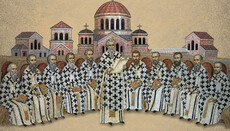
Only in the sixth century did the title "patriarch" become a stable designation for the primates of the five largest sees. Novella 123 of Emperor Justinian, dated May 1, 546, directly lists the "archbishops and patriarchs" of ancient Rome, Constantinople, Alexandria, Antioch, and Jerusalem.
The Limits of the Highest Authority
How, in practical terms, did a patriarch differ from a metropolitan? There was still no single list of his powers in the fourth and fifth centuries, but the following picture gradually emerged.
A metropolitan headed one church province. He presided over the regional council, took part in the ordination of bishops, and, together with them, examined disputes within his region. Canon 4 of the Council of Nicaea (325) required that the ordination of a new bishop receive the approval of the metropolitan, while Canon 9 of the Council of Antioch (341) entrusted him with "care of the whole region."
A patriarch stood over several metropolises. In particular, Canon 28 of the Council of Chalcedon (451) granted the Archbishop of Constantinople the right to ordain the metropolitans of Pontus, Asia, and Thrace. At the same time, ordinary bishops continued to be ordained by the metropolitan and the bishops of the respective province.
The judicial function was even more important. A dispute between bishops was examined by the regional council headed by the metropolitan.
But if the complaint concerned the metropolitan himself, the next instance appeared – the patriarch.
In the sixth century, Justinian's legislation directly established that cases of bishops are examined by the metropolitan, while complaints against the metropolitan and appeals against his decisions go to the patriarch.
Thus, the difference lay primarily in the scale of authority. A metropolitan coordinated the bishops of one region; a patriarch coordinated the metropolitans of several regions and became the highest judicial instance for them. However, he did not become the direct administrator of each diocese. The bishop retained authority in his diocese, the metropolitan in his province, and the patriarch was to act within the limits of his broader jurisdiction and, as a rule, conciliarly.
The Influence of Politics on Authority
Neither Christ nor the apostles created patriarchates, still less did they compile a list of future patriarchates or arrange them in their places in the Diptychs. The five sees known to us rose gradually and for various reasons, both religious and quite mundane.
Among the religious factors one can name the antiquity of the community, apostolic origin, theological authority, and missionary activity. But the political and administrative factor was perhaps of even greater importance.
The church structure of the late Roman Empire largely repeated the civil one. The bishop of the main city of a province became a metropolitan, while the sees of the largest administrative centers gradually acquired influence over groups of metropolises.
This is quite understandable. Provincial capitals housed state institutions, courts, schools, and large financial resources. Roads and trade routes converged there, and officials and petitioners came there. The bishop of such a city had far greater opportunities than the bishop of a small provincial town. Moreover, when political expediency required the elevation of a see, religious factors were, as a rule, disregarded.
In this respect, the comparison of Jerusalem and Constantinople is instructive. Jerusalem is the city of Christ's Crucifixion and Resurrection, the city of the apostles and the first Christian community. But because it had become a sparsely populated provincial town that had survived several wars and almost complete destruction, the Christian community of this city became part of the metropolis of Caesarea, which was politically more important.
Constantinople represents the opposite case. Its see could not compare in antiquity with Rome, Antioch, or Ephesus. Most likely it was not of apostolic origin. The legend of the founding of the see of Byzantium by the Apostle Andrew the First-Called appears only at the end of the seventh or the beginning of the eighth century. But once the city became the eastern capital of the empire, the status of its bishop very quickly rose almost to the level of the Bishop of Rome.
Ecclesiastical Recognition of the New Rome
In 381, the Second Ecumenical Council in Constantinople decreed: "Let the Bishop of Constantinople have the prerogative of honor after the Bishop of Rome, because that city is the New Rome." The reason for the elevation is stated with utmost clarity: the political position of the city.
Seventy years later, Canon 28 of the Fourth Ecumenical Council in Chalcedon repeats the same logic: the rights of the See of Constantinople are conditioned by the fact that it is "the city of the emperor and the senate." That is, a change in the city's political status entailed a change in its place in the church hierarchy.
Moreover, this mechanism operated not only in relation to the capital, but also to other, less significant cities. The Church understood the danger of such a mechanism.
Canon 12 of the same Council of Chalcedon reports that some bishops appealed to the secular authorities, obtained by imperial decrees the division of one region into two, and in this way tried to obtain metropolitan status. The Council forbade such a practice.
But Canon 17 of the Council of Chalcedon (451) established the principle according to which church governance must take civil organization into account. And Canon 38 of the Council in Trullo (691–692) formulated this principle even more clearly: "The distribution of church affairs must follow civil and state regulations."
Fierce Rivalry of the Great Sees
One should not think that relations between the patriarchates were built in the spirit of love and Gospel humility. Both the elevation of particular sees and the formation of their canonical territories sometimes took place in fierce confrontation.
A characteristic example is the long-standing rivalry between the Sees of Alexandria and Constantinople. The rise of Constantinople after the capital of the empire was moved there deeply wounded the feelings of Alexandria, which was accustomed to being first in the East. In the early fifth century, their confrontation entered a harsh phase. In 403, Theophilus of Alexandria expelled a group of Egyptian monks. The monks came to Constantinople, where they found refuge with John Chrysostom, and also lodged a complaint with the emperor about Theophilus's actions. Let us note, by the way, that an internal church conflict was submitted for resolution to a secular ruler. Summoned to answer the accusations, Theophilus arrived in the capital with thirty bishops and considerable funds for gifts to imperial officials. The gifts did their work, and Theophilus was soon transformed from the accused into the accuser, and the notorious Synod of the Oak deposed not him but John Chrysostom.
Theophilus's successor on the see of Alexandria, Cyril, used similar methods in his struggle against Nestorius, Archbishop of Constantinople. The historian A. Kartashev characterizes this confrontation thus: "Both his uncle Theophilus and he (Cyril – ed.) ruled for a total of about 60 years, all the while waging war against Constantinople, spending enormous sums on it."
No less telling is the long-standing confrontation between Jerusalem and Antioch. In 431, Juvenal, Bishop of Jerusalem, still formally subordinate to the metropolitan of Caesarea, already claimed authority over all three Palestinian provinces of the Roman Empire, as well as over Phoenicia and Arabia – regions of the See of Antioch. In 449, at the infamous "Robber Council," he supported Dioscorus of Alexandria and took part in the deposition of Flavian, Archbishop of Constantinople, and Domnus, Bishop of Antioch, whom he accused of interfering in the affairs of Phoenicia. Later, Photius, Bishop of Tyre, declared that he had signed the decree transferring Phoenicia to the See of Jerusalem under pressure.
However, only two years later, at the Council of Chalcedon (451), Juvenal changed his position and spoke against Dioscorus, whom he had previously supported.
There, too, his long dispute with Antioch came to an end: by agreement with its bishop Maximus, Jerusalem received all three Palestines, renouncing its claims to Phoenicia and Arabia. Thus the territory of the future Patriarchate of Jerusalem was formed.
These are only some examples. History testifies that the system of patriarchates was not established once and for all in finished form and did not arise in an atmosphere of brotherly love. It took shape gradually through customs, decisions of councils and emperors, compromises, and conflicts between the sees themselves, which, incidentally, continue to this day.
Independent Ancient Church Regions
Gradually, in the fourth to seventh centuries, the pentarchy took shape, by which was meant the special position of the five largest patriarchal sees. At the same time, there was no "council of five" or similar body that would be granted powers of authority. The chronology of the creation of the pentarchy can be summarized as follows:
- in 325, the Council of Nicaea mentions the special rights of Rome, Alexandria, and Antioch and the special honor of Jerusalem;
- in 381, Constantinople receives second place in honor after Rome;
- in 451, it acquires concrete supra-metropolitan powers, and Jerusalem receives the three Palestinian provinces;
- in the sixth century, Justinian's legislation directly singles out five patriarchal sees;
- at the end of the seventh century, Canon 36 of the Council in Trullo establishes in the eastern canonical tradition their sequence: Rome, Constantinople, Alexandria, Antioch, Jerusalem.
However, the Church itself was not exhausted by the pentarchy. The most obvious example is the Church of Cyprus, in whose formation the apostles Barnabas, Paul, and John Mark labored (Acts 13:4–12; 15:39). By the fourth century, there were already several episcopal sees here that independently elected their metropolitan. In 367, the famous theologian Epiphanius of Cyprus became one. However, in the fifth century, the See of Antioch attempted to subordinate the Cypriot See on the grounds that the territory of Cyprus was part of the imperial diocese of the East centered in Antioch. This story is also full of intrigues involving the powerful of this world, but the Cypriots nevertheless managed to defend their independence. The Third Ecumenical Council (431) confirmed the independence of the Church of Cyprus and established in Canon 8 a general prohibition on the seizure of other churches' regions, so that "under the pretext of sacred ministry the arrogance of worldly power may not creep in." At the same time, the Church of Cyprus did not receive the status of a patriarchate, but neither did it become part of one of the five "principal" ones.
Another example is Georgia. At the end of the fifth century, Kartli had its own catholicosate and self-government, although historians still debate whether the Georgian Church of that time can be called fully autocephalous.
The most interesting and rather exotic example is the independent archbishopric of Justiniana Prima.
It was created in the Balkans in 535 by order of Emperor Justinian, in a city founded by him and bearing his own name. The explanation of why it arose and why it did not belong to any patriarchate but enjoyed independence is astonishing: in Novella 11 of his famous Code, Justinian wrote that he simply wanted to elevate his native region.
There are other examples of independent church structures that did not belong to any of the five patriarchates.
The Human Factor in Church History
The patriarchal system as a separate supra-metropolitan level of governance is rather late, has no apostolic origin, and was formed under the influence not only of religious factors but also of political and administrative ones. In certain periods of history and in certain situations, the patriarchal form helped overcome conflicts and formulate commonly accepted doctrine. But one cannot close one's eyes to the negative aspects connected with the patriarchates: the struggle for power, disputes over territories, determining whose see is greater, and so on.
But the main danger for the Church, in our view, arises when patriarchal authority, the system of the pentarchy, or particular patriarchates begin to be sacralized, when historically formed forms of administration begin to be given a sacred character.
For example, in the eleventh century, Patriarch Peter III of Antioch wrote: "By divine grace it has been established that there be five patriarchs in the whole world." He likened the five patriarchal sees to the five senses of the human body: just as there cannot be a sixth sense, so, in his view, there should not be a sixth patriarch.
In different periods, people created a sacred aura around particular patriarchates, thereby justifying their claims to universal authority or ecumenical powers. Not infrequently, recognition of the authority of a particular patriarch over oneself was set forth as a criterion of belonging to the Church of Christ. This is especially noticeable in the example of the Churches of Rome and Constantinople. In the following publications on the ancient Church, we will examine the history and position of these sees in more detail.