A Chronicle Without an Author
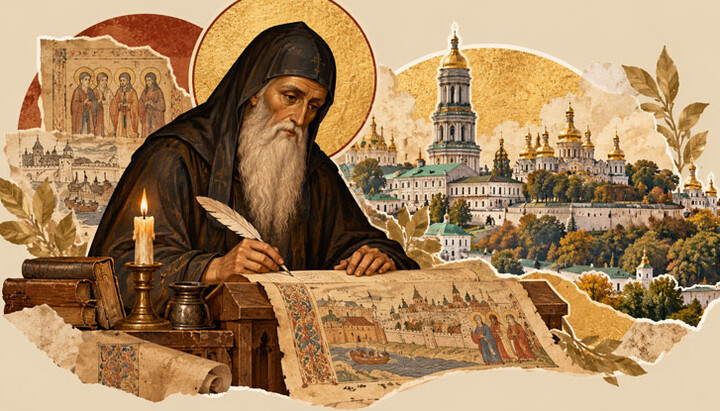
On March 20, 1377, the monk Lavrenty laid down his pen. For two months, beginning on January 14, he had been copying "from an old chronicler" a large book for Dmitry Konstantinovich, Prince of Suzdal and Nizhny Novgorod. The work was painstaking. Having finished it, he left a note on the last page, the gist of which is this: a merchant rejoices in a profitable deal, a helmsman in a quiet harbor, a wanderer in his return home, and a scribe rejoices in the last line of his work.
In that same year, Nizhny Novgorod, where Lavrenty labored, was seized and burned by the Tatars. The book, thank God, survived. Today we call it the Laurentian Chronicle, and it is in this book that the oldest surviving copy of the "Tale of Bygone Years" has been preserved.
This short note explains that the chronicle was not created by a solitary genius. Several generations of monks worked on it. Each received the work from his predecessor, added to it, and passed it on.
The Riddle of St. Nestor
Since our school days we remember: the "Tale of Bygone Years" was written by St. Nestor the Chronicler, a monk of the Kiev Caves Monastery. The Church venerates his memory, and his name has become a symbol of Old Rus' chronicle writing. However, in the Laurentian Chronicle the title of the Tale does not name an author. In the Hypatian copy of the early 15th century, the author is called "a blackrobed monk of the Monastery of Theodosius of the Caves," that is, a monk of the Caves Monastery, without a name. The name of St. Nestor first appears only in the late Khlebnikov copy of the mid-16th century. Some scholars even consider it a later insertion.
Does this mean that the tradition is mistaken? Not at all.
According to tradition and in the opinion of most researchers, it was Nestor who around 1113 compiled the first redaction of the Tale. True, this redaction itself has not come down to us. As a separate book, the "Tale of Bygone Years" has not survived at all: we read it only as part of later chronicle compilations.
There are suggestions that Nestor, too, had predecessors. According to one hypothesis, a so-called Initial Compilation had already been made in the 11th century. Not all scholars agree, but the logic is clear: each generation of chroniclers relied on the work of the previous one. One of the editors of the Tale remarks under the year 1114 that he had himself been to Ladoga and questioned the local inhabitants. From this we learn that the chronicler was not only a copyist but also a researcher.
The Abbot's Signature
If Nestor's name is not in the Tale, then whose is? The answer is found at its end, in the Laurentian copy. There stands a note of 1116, the only authorial signature in the entire Tale. Paraphrased in modern language, it reads: "I, Abbot Sylvester of the Monastery of St. Michael, wrote this book, hoping to receive mercy from God, when Vladimir reigned in Kiev and I was abbot, in the year 6624 from the creation of the world. Whoever reads this book, remember me in your prayers."
Sylvester headed the Vydubychi St. Michael's Monastery near Kiev, the family monastery of Prince Vladimir Monomakh. Later he became Bishop of Pereyaslavl. What exactly did he do with the chronicle? Most scholars consider him the copyist or the author of the second redaction of the Tale. There are also researchers who see in Sylvester the sole author of the book.
Note the last words of the entry. The abbot does not ask for glory; he asks only for the reader's prayer. This is perhaps the best explanation of why Old Rus' chroniclers so rarely signed their work.
Anonymous and Named Authors
It is commonly believed that chronicles were created by anonymous monks. This is partly true. Among all the chroniclers of the 11th–14th centuries, only four are known by name: Nestor, Sylvester, Lavrenty, and the Novgorod sacristan Timofey. Moreover, the last was not even a monk but a parish cleric who copied liturgical books to order and served as secretary to the archbishop.
The Laurentian Chronicle, as we already know, is not anonymous: Lavrenty named himself as its author, and two other scribes worked on the book together with him. But the compilers of the Hypatian Chronicle we truly do not know by name. Researchers connect one part of it, the Kiev Chronicle, with the Vydubychi abbot Moisey, but this is only conjecture.
Curiously, the Hypatian Chronicle received its name from the Hypatian Monastery in Kostroma, where it was found, although it has no connection to Kostroma. It preserves southern Rus', Kievan, and Galician-Volhynian accounts, whereas the Laurentian speaks primarily of north-eastern Rus'. Together these books complement each other.
Why Did Monasteries Become Centers of Chronicle Writing?
It would seem the answer is obvious: monasteries had literate people and libraries. This is true, but only in part. No less important is that chronicles were commissioned and kept by metropolitans, bishops, princes, and, probably, abbots. Often a chronicle existed in a single copy, and it was guarded as a treasure.
Moreover, a chronicle was also a legal document. In 1432, Prince Yury Dmitrievich proved his rights to the grand princely throne in the Horde with old chronicles and his father's testament. A chronicle entry could decide the fate of a throne.
The result of this many-year chronicle relay is striking. Academician D. S. Likhachev wrote of the "Tale of Bygone Years": "never before or after, up to the 16th century, did Russian historical thought rise to such a height of scholarly inquisitiveness and literary skill."
The chronicle was created by a whole constellation of monks, and most of them remained nameless. Each labored in hope of God's mercy and the prayers of a future reader. And perhaps the best thing we can do today, opening their works, is to fulfill this modest request of the ancient authors.
Read also
Stories of the Ancient Church. Level of Governance: Patriarch
How did several episcopal sees rise above the rest, why did the church map begin to repeat the map of the empire, and is the patriarchate a sacred form of Church organization?
A Chronicle Without an Author
We are used to calling the "Tale of Bygone Years" the work of St. Nestor. But the signature on it was left by a different monk, and the chronicle itself was passed from hand to hand.
How a wedding stopped a war
The young princess of Slutsk was married off to keep two powerful noble families from drowning the city in blood. Soon afterward, a Uniate metropolitan complained that Orthodoxy had been reborn in Slutsk.
Man before the forces of nature
A solitary figure on the shore seems insignificant before the immense power of the sea, yet it is he who stands before the Creator.
The mysteries of Golgotha in the light of archaeology
The veil of centuries obscures what really happened in the fourth century. Archaeology and ancient texts shed light on the true history of one of Christianity’s greatest sacred sites.
Zaporozhian Cossacks defend the persecuted faith
The story of how Cossacks drew their sabers to defend abused priests – while sometimes causing violent disturbances inside churches themselves.