The Prophet Elisha and the mystery of the Bethel massacre
The story of the prophet Elisha and the two bears seems to be the harshest in the Bible. But in reality, it carries a profound theological meaning.
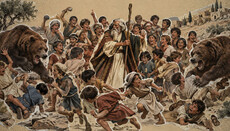
Anyone who regularly reads Holy Scripture will sooner or later encounter passages that can leave an inexperienced reader deeply troubled. The Second Book of Kings contains two brief verses that critics of the Bible have used for centuries as a major argument against Old Testament morality. The Prophet Elisha is traveling from Jericho to Bethel when a group of children runs out to meet him and begins shouting insults. The prophet then curses them in the name of the Lord, and two she-bears emerge from the woods and maul forty-two of them.
At first glance, the scene appears horrifying: a stern old man brutally punishes innocent little children for a foolish playground taunt. Yet a superficial reading of the Synodal translation seriously distorts the true meaning of what happened. When we turn to the original Hebrew and examine scholarly research, an entirely different picture emerges.
The details of the ancient text
The Synodal translation uses the expression “little children,” conjuring up an image of harmless three-year-olds. The Hebrew text, however, uses the phrase ne'arim qetannim.
In Old Testament Hebrew, the word na'ar was not used exclusively for infants or small children. Ancient writers employed the term to describe young men, young servants, warriors, or youths ranging in age from twelve to thirty. The Bible uses the same word for seventeen-year-old Joseph, thirty-year-old Joshua, and a company of Abraham’s experienced warriors. The second element, qetannim, translated as “little,” can denote junior status within a group or a subordinate position in Semitic languages, rather than necessarily indicating infancy.
In a detailed study of this passage, Orthodox biblical scholar A. S. Kashkin makes a compelling case that Elisha was not confronted by defenseless little children. Instead, an aggressive gang of young people, adolescents and young men between the ages of fifteen and twenty, poured onto the road. They formed a cohesive group of local youths who had either been deliberately sent out or had gathered together to harass the prophet.
A center of pagan worship in Israel
To understand the source of such intense hostility, we must look at the map of the Holy Land during that period. Elisha was heading toward Bethel, which at the time was a major center of idolatry in the Kingdom of Israel. It was there that King Jeroboam had erected a golden calf, establishing an alternative form of worship to draw the people away from the Temple in Jerusalem. Bethel depended on pagan sacrifices, its priestly establishment flourished, and the city’s inhabitants harbored deep hostility toward the prophets of the true God.
The young men’s cry, “Go up, you baldhead!” appears in the original Hebrew as aleh, qereach. The verb aleh literally means “go up” or “ascend.”
In this way, the young pagans were mockingly alluding to a recent event – the fiery ascent of the Prophet Elijah into heaven. They were ridiculing the great miracle, effectively shouting at Elisha: “Why don’t you ascend to heaven too? Get out of here! Rid our city of your presence!”
The second word, qereach, translated as “baldhead,” was a flagrant social insult. In ancient Israel, baldness was associated with leprosy or pagan mourning rituals. By shouting these words, the crowd was deliberately mocking Elisha’s prophetic status and denying his right to preach the Word of God.
A lesson in prophetic authority
The scale of the threat becomes apparent when we consider the number forty-two. The text tells us that the she-bears mauled forty-two members of the attacking group. The entire crowd must therefore have been even larger. The Prophet Elisha was walking alone along a deserted road when an enraged mob of more than fifty young fanatics descended upon him.
The solitary prophet faced a genuine threat to his life. The pagan crowd intended either to deal violently with Elijah’s successor or to drive him from their territory in disgrace. Elisha stood at the threshold of his great ministry. Had he retreated before this aggressive group, his spiritual authority in Israel would have been destroyed at the very beginning of his mission.
It is important to note that Elisha did not personally set the animals upon his attackers. He cursed those who blasphemed in the name of the Lord, thereby entrusting judgment to God. It was the Creator Himself who carried out the punishment. At a turning point in history, when the preservation of faith in the true God amid paganism hung in the balance, the Lord protected His prophet.
This Old Testament account calls us to approach the Word of God with reverence and awe. When we examine the context of Holy Scripture more deeply, difficult passages cease to appear merely cruel and instead reveal the stern reality of the struggle between faith and godlessness.