The mysterious “bridegroom of blood” in the Book of Exodus
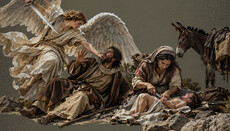
A dusty caravan makes its way west across the scorching desert, leaving Jethro’s pastures behind. At God’s command, Moses is returning to Egypt, a wooden staff clutched in his hand. Long years of exile lie behind him; ahead awaits the great exodus of his people from slavery. The evening sun quickly sinks below the horizon, plunging the road into darkness. The caravan stops for the night and sets up a temporary camp beneath the open sky.
Nothing suggests that danger is near. His wife Zipporah settles the weary children down to sleep, while the animals chew on thorny desert plants. But as the camp sinks into deep sleep, a strange darkness closes in around the prophet. The Bible describes the moment this way: “At a lodging place on the way, the Lord met him [Moses – Ed.] and sought to kill him” (Ex. 4:24).
The Book of Exodus breaks off at this terrifying moment without explaining the reason for God’s sudden wrath. The prophet who had only recently spoken with God at the burning bush suddenly finds himself facing the Creator’s displeasure.
Disputes in the Midianite tent
Why does the Lord’s wrath fall upon the patriarch precisely during the journey? The answer lies in the details of his family life.
St. Ephrem the Syrian points to a longstanding conflict within the family. Having married the daughter of a Midianite priest, Moses found himself caught between two different worlds. When children were born to them, a dispute over faith arose in the young family. Moses insisted on fulfilling the covenant given to Abraham and circumcising his sons according to the law of his ancestors. Zipporah resisted, defending the customs of her own people.
Eventually, the couple reached a fragile compromise. One boy was circumcised, while the other was left uncircumcised, yielding to the pleas of his mother and her relatives.
For years, this compromise may have seemed like an insignificant detail amid the bustle of nomadic life. But just before Moses entered Egypt, it became clear that disregarding God’s covenant would not go unanswered.
Jewish tradition offers a more practical explanation. At the first stop in the wilderness, Moses intended to circumcise his eldest son but first turned his attention to arranging the night’s lodging and postponed the important task. The delay brought divine punishment.
The differences among ancient translations of this passage are also revealing. The Greek Septuagint softens the horror of the scene by saying that the angel of the Lord met Moses. The ancient Hebrew text speaks directly of the divine presence. Even early translators sensed the profound difficulty of this biblical passage.
A sudden deliverance
The night camp becomes the scene of a spiritual struggle. Moses is paralyzed by an unknown force, and life is rapidly draining from his body. Zipporah immediately realizes the true cause of what is happening.
She does not lose her composure in the face of death. She grabs a sharp flint knife – an archaic implement underscoring the antiquity of the rite – and circumcises her son herself.
Drops of the child’s blood fall onto the dry ground. Zipporah approaches her dying husband and casts the severed foreskin at his feet, uttering the strange words: “Surely you are a bridegroom of blood to me” (Ex. 4:25).
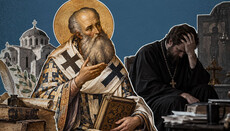
St. Gregory of Nyssa sees profound symbolic meaning in her action. Zipporah the Midianite represents human wisdom from outside the faith, which must be purified of the defilement of error by entering into the divine covenant. The leader of Israel is saved by the hands of a foreign woman who has come to recognize the greatness of his law.
The mysterious “bridegroom of blood”
Immediately afterward, the threat recedes, but the key phrase is repeated: “A bridegroom of blood – because of the circumcision” (Ex. 4:26). What did these words mean in the language of ancient nomadic peoples?
Commentators offer two very different answers. The first interpretation sees the phrase as the language of redemption. Zipporah calls her husband this because the blood that was shed redeemed the head of the family from the wrath of the Creator. One life is saved at the price of another’s blood.
The second interpretation has its roots in Midianite tribal customs. The expression may have referred to an ancient rite establishing bonds of blood kinship and protection. By performing the circumcision, Zipporah in a sense renewed her husband’s bond with her people, bringing him within the protection of the tribe in the face of an unknown danger.
St. Augustine compares this episode with the long process of a person’s growth in faith, in which the movement of the soul comes first and is then followed by the visible sign of the covenant.
Moses’ journey continues. In the morning, the caravan will once again head west, toward the banks of the Nile. The prophet will walk on, leaning on his staff, carrying with him the lesson of that terrifying night that changed his life forever.