Author of anti-church laws Yelensky criticizes bill against sects
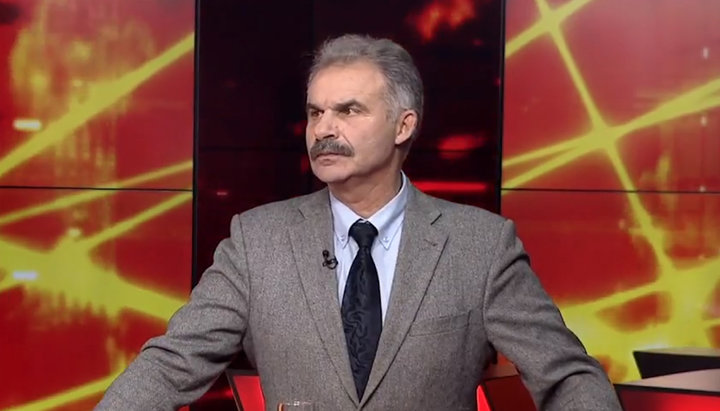
Viktor Yelensky. Photo: zik.ua
People's deputy of Ukraine and one of the authors of anti-church laws Viktor Yelensky opposes the legislative initiative of Galina Tretyakova, a member of the “Servant of the People’ faction, who proposed fighting pseudo-religious organizations (sects – Ed.). Yelensky wrote about this on his Facebook page.
According to Yelensky, the bill aimed at protecting people from swindlers who hide behind the signs of "religious organizations" is "a poorly disguised attempt on freedom of conscience".
Yelensky is sure that "an attempt to legally punish destructive / totalitarian / bad religion will certainly hit everyone else".
The MP believes that practically all monasteries fall under the definition of “totalitarian sects” developed by Tretyakova's predecessors: “Well, just come to the first monastery you come across or to exorcisms to cast out demons, or to night vigils, or simply to a sermon about the miracles of the Saviour and take them while they are lax."
Yelensky writes that in relation to "abuses" by "conditional Muntian or Adelaji", "it is necessary to apply the Criminal Code, and not produce laws that, at best, will not work, and at worst, will become an instrument of combating the wrong, in the humble opinion authorities, religious organizations ”.
“What other laws are needed to punish, for example, a clergyman who openly disrupts military mobilization? Or urges not to comply with quarantine measures during a pandemic? Or organizes the exclusion of believers from their own temple? Or imposes compulsory extortions on the faithful? Arrange dens in prayer buildings?” wonders the people's deputy.
This is exactly what is needed to "focus parliamentary control", because the bill to combat sects is "a poorly disguised attempt on freedom of conscience".
In addition, according to Yelensky, when an anti-sectarian squeal arose in Ukraine, “militarized detachments were created at diocesan offices, Russian emissaries – future war criminals – buzzed about churches, all these self-defenses and "Cossacks" were formed, and the flock was simply pumped up with militant anti-Ukrainian ideology".
The people's deputy "responsibly claims" that "the anti-sectarian, and in the Crimea – anti-Islamic campaigns, were real cover-up operations. But I can’t say that this time it is not so at all”.
Yelensky also wrote that “judging by her statement, Ms. Tretyakova understands destructive religious organizations as those that practise a doctrine that contradicts the national interests of the state,” and in his opinion, “one religious organization, with which the current government does not seem to quarrel, falls entirely under this definition…”.
Earlier, the UOJ wrote that according to the author of the anti-church law No. 4128 Viktor Yelensky, autocephaly is not a matter of theology but pure politics, and the stories of the UOC about persecution are a spit on the graves of the righteous of faith.
Read also
Metropolitan Onuphry calls for prayers to Mother of God for peace in Ukraine
On the feast day of the “She Who Is Quick to Hear” icon, the UOC Primate spoke of the Mother of God’s maternal care and urged the faithful to live by the laws of holiness and love.
OCU holds evening of wedding rituals at seized Cherkasy cathedral
An event featuring participants dressing in traditional wedding attire and reenacting folk rituals to bandura accompaniment was held at St. Michael’s Cathedral in Cherkasy.
Volodymyr-Volynskyi Eparchy marks 30 years since restoration
The Pantanassa Icon and relics of Prince Volodymyr have arrived in Kovel and will visit churches across the Volodymyr-Volynskyi Eparchy to mark the 30th anniversary of the restoration of the episcopal see.
Bukovyna faithful bring humanitarian aid to Kherson region residents
The UOC’s Chernivtsi Eparchy delivered food to Holy Spirit Cathedral in Kherson.
Ukraine must have its own faith: Poroshenko's party lays out peace terms
Poroshenko’s party European Solidarity described church policy as a matter of national sovereignty and said there can be no compromises in this area.
432 UOC churches damaged in Ukraine during war, report says
According to the Religion on Fire project, 807 religious buildings in Ukraine have been damaged or destroyed as a result of hostilities.